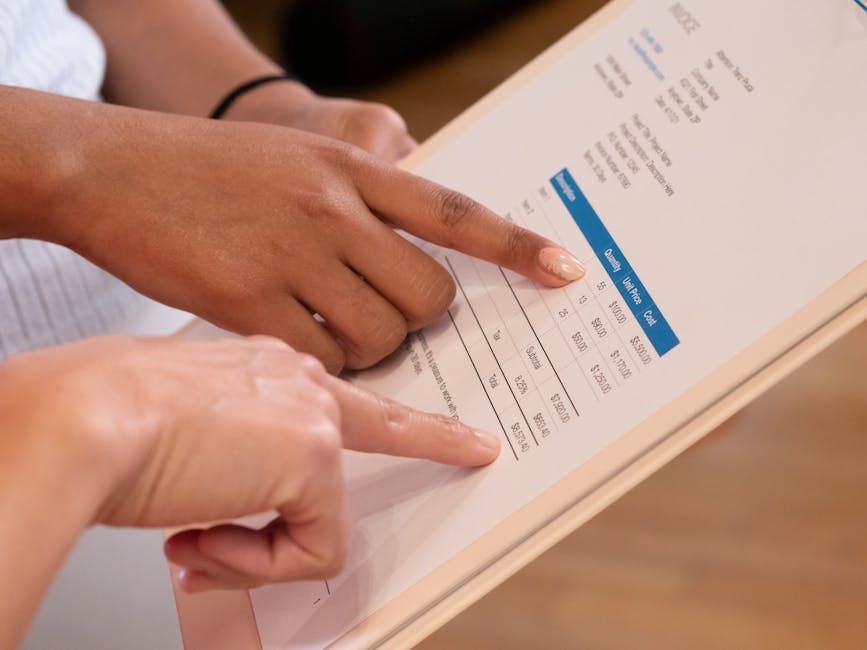
The DRC in a sentence: you stop collecting VAT, your customer accounts for it instead
Under the VAT domestic reverse charge for construction services, which has been in force since 1 March 2021, subcontractors in scope do not charge VAT to their customers. Instead, the customer (the main contractor or upper-tier subcontractor) accounts for the VAT to HMRC directly. Your invoice shows the net amount only. No VAT changes hands between you and the customer.
This has real consequences for your cash flow, your VAT return, and, if you are on the flat-rate scheme, your VAT position more broadly. This guide works through each of those in turn, starting with whether the DRC applies to your specific situation at all.
This guide is written for subcontractors who issue invoices. If you are a main contractor receiving reverse-charge invoices and need to understand how to handle them and complete your VAT return, read our guide to VAT reverse charge for CIS contractors. For a broader overview of the DRC rules covering both sides of the supply, see the VAT domestic reverse charge construction overview.
The five-condition checklist: do I need to apply the DRC?
Run this checklist before every invoice you raise. The DRC applies only when all five conditions are met. If any one of them is not satisfied, you must charge VAT in the normal way.
| Condition | Check |
|---|---|
| 1. Specified CIS service | Your work is a CIS construction service: building, alteration, repair, extension, demolition, installation of mechanical or electrical systems, painting and decorating, civil engineering, internal cleaning during construction. If your work is design-only, off-site manufacture, surveying, or professional services, it is likely outside CIS and the DRC does not apply. |
| 2. You are VAT-registered | If you are not registered for VAT, you cannot apply the DRC and there is no VAT to consider. This guide assumes you are VAT-registered. |
| 3. Your customer is VAT-registered | If your customer is not VAT-registered, the DRC cannot apply. Ask for their VAT number and record it. You cannot apply the reverse charge to an unregistered customer. |
| 4. Your customer is CIS-registered | If your customer is not CIS-registered, the DRC does not apply. Verify their status before assuming. Property developers who spend over £3 million a year on construction work are deemed contractors and should be CIS-registered, but some are not yet registered. |
| 5. Your customer is NOT the end user | This is the condition most commonly misread. The end-user exception is covered in detail below. If your customer is a property owner, a tenant, or a developer building for their own portfolio, you must charge VAT normally even if all other conditions are met. |
There is a sixth point to consider: the supply must be standard-rated or reduced-rated. Zero-rated new-build residential work is outside the DRC entirely. If your work qualifies for zero-rating, you invoice at 0% VAT in the normal way without any reverse-charge obligation.
When your customer is the end user: charge VAT normally
The end-user exception is the single condition that generates the most DRC errors in practice. Many subcontractors assume the DRC always applies when they work through a CIS contractor, but it does not. What matters is whether your customer will consume the building work themselves or sell it on as construction services.
Your customer is an end user (and you must charge VAT normally) if they are:
- A property owner commissioning work on their own building, whether they occupy it, let it, or use it in their own business.
- A tenant fitting out or refurbishing their own leasehold premises.
- A property developer who will incorporate your construction work into a finished development they own. They are not selling your plastering or groundworks on to someone else as construction services; they are selling finished flats or commercial units. That makes them the end user of your construction work.
- A company building a new factory or office for its own use.
In every case above, you should charge VAT in the normal way at 20%. If you apply the DRC to an end-user customer, HMRC can assess you for the VAT that should have been charged. Getting written confirmation of your customer's end-user status at the start of every relationship is the practical safeguard.
The end-user test is separate from the CIS contractor/subcontractor distinction. A large property developer can be simultaneously a CIS deemed contractor (CIS-registered because of their construction spend) and an end user (for DRC purposes). Their CIS registration does not change the DRC analysis. What matters is the economic nature of the supply: does the customer consume the work, or sell it on?
What to write on a DRC invoice
When all five conditions are met and the DRC applies, your invoice must show the following:
- The net value of the work (labour and materials separately where relevant for CIS deduction purposes).
- No VAT charged as a separate line (zero in the VAT column).
- The VAT rate that would have applied (20% for standard-rated work).
- The amount of VAT the customer must account for.
- The reverse-charge legend directing the customer to account for the VAT.
HMRC's recommended wording for the legend is: "Reverse charge: customer to account for VAT to HMRC at the applicable rate on the VAT-exclusive price shown."
A sample invoice layout for a plumbing subcontractor on a commercial refurbishment:
| Description | Amount |
|---|---|
| Labour: plumbing installation (heating system), 3 weeks | £4,200 |
| Materials: copper pipe, fittings, valves | £1,600 |
| Net total | £5,800 |
| VAT (reverse charge, customer to account for at 20%: £1,160) | £0.00 |
| Invoice total | £5,800 |
| Reverse charge: customer to account for VAT to HMRC at 20% on the VAT-exclusive price shown (£5,800). VAT amount: £1,160. | |
Your VAT return records: £5,800 in box 6 (value of sales). You do not include the £1,160 as output tax in box 1. Your customer records the £1,160 in both box 1 and box 4 of their return.
Cash flow impact: the VAT float disappears
Before the DRC applied to your work, you collected 20% VAT on each invoice and held that money until your next VAT return was due. On £8,000 of monthly net invoicing, that is £1,600 of VAT you collected, held for up to three months (on quarterly returns), and then paid net of any input VAT you had incurred. That float was a meaningful source of working capital.
Under the DRC, the float disappears. You invoice at net. You do not collect any VAT from customers on DRC supplies. At the same time, you continue to pay input VAT on materials, tools, vehicles and other business costs. With no output VAT coming in and input VAT going out, you will very likely be in a net repayment position with HMRC each period.
On a quarterly return, that means waiting up to three months (plus HMRC processing time) to recover the input VAT you have already paid out. The practical solution for subcontractors with predominantly DRC work is to switch to monthly VAT returns. Monthly returns accelerate input VAT recovery: instead of one refund every quarter, you receive one every month. There is no cost to switching and no requirement to demonstrate a reason. Apply online through your HMRC VAT account.
Want this checked against your specific situation?
Leave your details and a one-line summary, and a specialist CIS accountant will look at your position. No obligation.
The flat-rate scheme and the DRC: you should almost certainly exit
The flat-rate scheme (FRS) works by letting you pay a fixed percentage of your gross (VAT-inclusive) turnover to HMRC, rather than calculating the actual difference between output and input VAT each period. Under normal VAT rules, the FRS is profitable because the fixed rate (for example, 9.5% for general construction services) is lower than the 20% VAT you collect, so you keep the difference.
Under the DRC, that logic breaks down. You do not collect any VAT from customers on DRC supplies, so there is no 20% income for the flat rate to work against. If most of your sales are DRC supplies:
- Your flat-rate calculation is based on a very small gross turnover figure (since no VAT is included in your DRC invoices).
- You still pay input VAT on materials and equipment, but the flat-rate scheme does not let you recover this separately.
- The net result is that the scheme costs you money rather than saving it.
HMRC's guidance acknowledges this and confirms that businesses for whom the DRC applies to most of their supplies should consider leaving the FRS and moving to standard VAT accounting. On standard VAT accounting you recover input tax directly, which is the right mechanism when you are in a persistent repayment position due to the DRC. Leaving the FRS is done by writing to HMRC; you can generally leave at any time.
Worked example: gross versus net effect for a DRC subcontractor on quarterly returns
A roofer is VAT-registered, on standard VAT accounting, on quarterly returns. Their gross CIS income is £7,000 a month net (100% subject to DRC). They spend £1,400 a month on materials before VAT, on which they pay £280 of input VAT per month (20%).
| Position | Normal VAT (pre-DRC) | Under DRC |
|---|---|---|
| Output VAT collected per month | £1,400 (20% of £7,000) | £0 |
| Input VAT paid per month | £280 | £280 |
| Net VAT payable / (repayable) per month | £1,120 payable | £280 repayable |
| Cash flow quarterly (quarterly return) | £3,360 paid to HMRC quarterly | £840 waiting to be reclaimed quarterly |
| Cash flow on monthly returns | Not material | £280 reclaimed monthly instead |
Switching to monthly returns means the roofer recovers their input VAT monthly rather than quarterly, which on £280 per month represents a meaningful working capital improvement over the course of a year.
Your Self Assessment and CIS position under the DRC
The DRC does not change your taxable income for Self Assessment purposes. Your gross CIS receipts are the net amounts on your invoices (ex-VAT), which is the same as they would be under normal VAT rules: the invoiced amount before any CIS deduction. The CIS deduction your customer takes (20% if you are registered, 0% if you hold Gross Payment Status) is calculated on the labour element of that net figure in the usual way.
The income you report on your Self Assessment return is the gross CIS figure (before your customer's CIS deduction), just as always. The deductions taken form part of your advance tax payments. For more on how Self Assessment works for CIS subcontractors and how to claim back over-deducted CIS, see our guide to the CIS Self Assessment process.
Practical next steps
If a significant portion of your work is subject to the DRC:
- Review your VAT return frequency and switch to monthly returns if you are currently on quarterly.
- If you are on the flat-rate scheme, review whether it is still beneficial given your DRC exposure and exit it if not.
- Update your invoice template to include the correct reverse-charge legend and remove the VAT line on DRC invoices.
- Get written confirmation of end-user status from any customers where there is doubt.
- Keep records confirming that conditions 3 and 4 (CIS registration and non-end-user status) are met for each customer relationship.
If your invoicing mixes DRC and non-DRC supplies, our CIS invoice splitter helps you calculate the labour-materials split and the correct deduction base for CIS. You can also find guidance on the broader set of compliance obligations for CIS subcontractors in our post on CIS compliance responsibilities.